
Beginner Upper-Body Workout at Home Without Weights
Starting a fitness routine does not have to mean joining a gym or buying a complete collection of workout equipment. If you are new to exercise, an upper-body workout at home without weights can be an accessible way to begin building strength, improving movement, and becoming more comfortable with regular physical activity.
Your upper body includes your shoulders, arms, chest, upper back, and core muscles that help stabilize your body during movement. While weights and resistance machines can be useful, beginners can start with simple bodyweight exercises that require little more than a wall, a sturdy elevated surface, and enough room to move safely.
This beginner-friendly routine focuses on five exercises: wall push-ups, incline push-ups, arm circles, triceps dips, and shoulder taps. Together, these movements can help introduce your body to different types of upper-body movement while allowing you to adjust the difficulty to match your current fitness level.
The goal is not to complete the hardest version of every exercise. Instead, focus on proper technique, controlled movements, and consistency. As you become stronger and more confident, you can gradually increase repetitions or move toward more challenging variations.
Why Try an Upper-Body Workout Without Weights?
Bodyweight workouts are popular because they are convenient and accessible. You can perform many exercises at home without purchasing dumbbells, resistance bands, or machines.
For beginners, this can remove one of the biggest barriers to starting a workout routine. You do not have to worry about choosing the right weights or learning how to operate complicated equipment. Instead, you can focus on learning basic movement patterns and developing good exercise habits.
Bodyweight exercises can also be modified. For example, a wall push-up is generally more accessible than a traditional floor push-up because your body is positioned more upright. As you gain strength, you can progress to incline push-ups using a sturdy elevated surface and eventually work toward floor push-ups if that is an appropriate goal for you.
Strength training is an important part of an overall fitness routine. Current U.S. physical activity guidelines recommend that adults include muscle-strengthening activities involving all major muscle groups on at least two days each week. The guidelines also emphasize that people who are inactive can begin with smaller amounts and gradually build up.
How to Prepare for Your Workout
Before beginning an upper-body workout, choose a clear and comfortable space where you can move without bumping into furniture or other objects.
You do not need a large home gym. A wall and a sturdy elevated surface can be enough for this routine. If you are performing triceps dips, make sure the surface you use is stable and designed to safely support your body weight.
Start with a few minutes of gentle movement to warm up. Arm swings, shoulder rolls, gentle marching, and controlled arm circles can help you transition from rest into exercise.
A warm-up does not need to be complicated. The purpose is simply to prepare your body for movement and gradually increase your activity level.
Wall Push-Ups
Wall push-ups are an excellent starting point for beginners who are not yet comfortable performing push-ups on the floor. They work many of the same upper-body muscles involved in traditional push-ups while allowing you to control the amount of resistance more easily.
Stand facing a wall with your feet a comfortable distance away. Place your hands against the wall at approximately chest height. Keep your body relatively straight as you bend your elbows and bring your chest toward the wall.
Pause briefly, then press through your hands to return to the starting position.
The farther your feet are from the wall, the more challenging the movement may feel. Beginners can start closer to the wall and gradually move their feet farther away as they become stronger.
Try performing 8 to 12 controlled repetitions to begin. If that feels too easy, you can gradually increase the number of repetitions or progress to an incline push-up.
One of the most important things to remember is to avoid rushing. A controlled wall push-up is more useful for learning proper movement than quickly completing a large number of repetitions.
Incline Push-Ups
Once wall push-ups feel comfortable, incline push-ups can provide a natural progression. Instead of placing your hands against a wall, you place them on a stable elevated surface.
A sturdy countertop, secured bench, or other appropriate surface may work, depending on your home setup. Make sure the surface will not move or tip before beginning.
Place your hands on the elevated surface slightly wider than your shoulders. Walk your feet backward until your body forms a relatively straight line from your head toward your heels.
Bend your elbows and lower your chest toward the surface while keeping your body controlled. Then press through your hands to return to the starting position.
The lower the surface, the more challenging the exercise generally becomes. Beginners can start with a higher surface and gradually work toward a lower incline as their strength improves.
Incline push-ups can target the chest, shoulders, and triceps while also requiring your core to help stabilize your body.
Start with approximately 6 to 10 repetitions and focus on quality rather than quantity.
Arm Circles
Arm circles are one of the simplest movements in this workout, but they can be useful for warming up the shoulders and introducing controlled upper-body movement.
Stand upright with your feet comfortably positioned. Extend your arms out to the sides at approximately shoulder height. Slowly make small circles with your arms.
After several repetitions, gradually make the circles slightly larger if that feels comfortable. Then reverse the direction.
You can perform arm circles for approximately 20 to 30 seconds in each direction.
The key is control. You do not need to make extremely large circles or move your arms rapidly. If your shoulders become uncomfortable, reduce the range of motion or stop the movement.
Arm circles can also be included during your warm-up before other upper-body exercises.
Triceps Dips
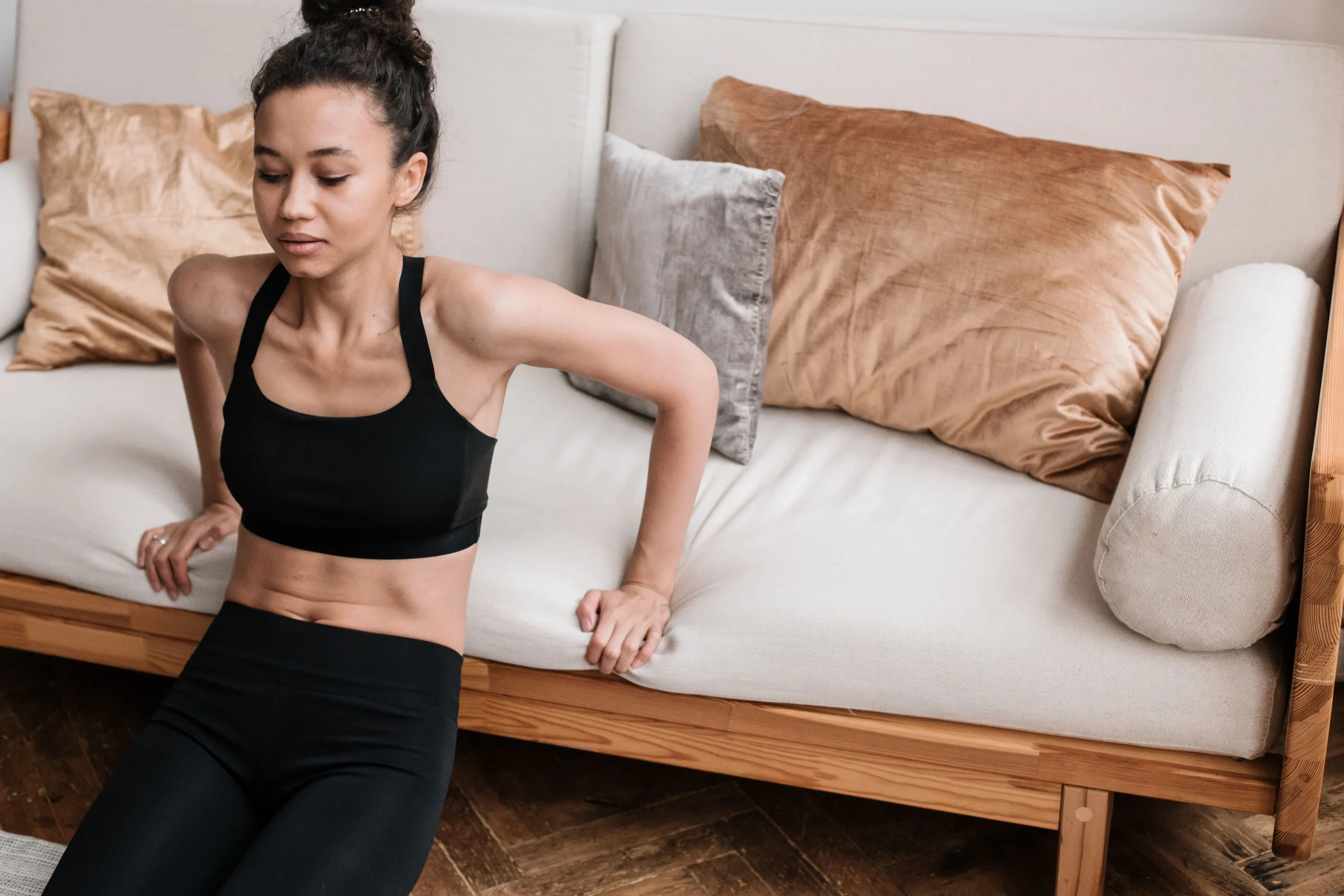
Triceps dips can be more challenging than wall or incline push-ups, so beginners should pay particular attention to the equipment and technique.
Use a sturdy, stable surface that is appropriate for supporting your body weight. Position yourself with your hands securely placed on the surface and your feet positioned comfortably.
Slowly bend your elbows to lower your body in a controlled manner, then press through your hands to return to the starting position.
You do not need to lower yourself deeply. Beginners can start with a small range of motion and focus on maintaining control.
Because the shoulders can be placed under significant stress during dips, avoid forcing the movement or continuing if you experience pain. If dips do not feel comfortable, you can substitute another beginner-friendly triceps exercise or continue with incline push-ups.
Start with 5 to 8 repetitions and gradually increase as you develop strength and confidence.
Shoulder Taps
Shoulder taps add a core-stability component to your upper-body workout. They can be performed from a high-plank position, although beginners can modify the exercise by using an elevated surface.
For an elevated version, place your hands on a sturdy surface and step your feet backward into a comfortable position. Keep your body stable and gently lift one hand to touch the opposite shoulder.
Return your hand to the surface and repeat on the other side.
The goal is to minimize excessive movement through your hips and torso. Move slowly rather than trying to complete as many taps as possible.
If the exercise feels too difficult, move your feet closer to the elevated surface or reduce the number of repetitions.
Shoulder taps can help beginners practice maintaining stability while moving one arm at a time.
A Simple Beginner Upper-Body Workout Routine
If you are just starting out, you can turn these five exercises into a straightforward home workout.
Begin with several minutes of gentle warm-up movements. Then perform wall push-ups for 8 to 12 repetitions, followed by arm circles for 20 to 30 seconds in each direction.
Next, perform 6 to 10 incline push-ups. Follow these with 5 to 8 controlled triceps dips if they feel comfortable and you have a stable surface.
Finish the circuit with approximately 6 to 10 shoulder taps on each side.
Rest between exercises whenever necessary. Once you have completed the entire circuit, take a longer recovery period and repeat it one or two more times depending on your fitness level.
You do not need to complete three rounds immediately. One round can be a perfectly reasonable starting point for someone who is new to strength training.
How Many Days a Week Should Beginners Train?
Beginners do not need to perform an upper-body workout every day. Your muscles need time to recover, particularly when you are introducing your body to resistance exercise for the first time.
A simple approach is to perform an upper-body strength workout two days per week with recovery days between sessions. You can combine this with walking, low-impact cardio, mobility work, or other activities on different days.
The U.S. physical activity guidelines recommend muscle-strengthening activity on at least two days per week for adults, with exercises that involve all major muscle groups.
As your fitness improves, you can gradually increase the volume of your workouts. This might mean adding another set, increasing repetitions, improving your technique, or progressing to a more challenging variation.
Progress should be gradual rather than forced.
How to Make Bodyweight Exercises More Challenging
One of the benefits of bodyweight training is that you can make exercises more difficult without purchasing weights.
For push-ups, you can gradually move from a wall to a higher incline, then to a lower incline. Eventually, you may be able to perform traditional floor push-ups if they are appropriate for your fitness level.
For shoulder taps, you can increase the number of repetitions or spend more time controlling each movement.
You can also increase the length of your workout by adding another circuit. However, doing more repetitions is not always the best form of progression. Better technique, greater control, and improved consistency are also meaningful signs of progress.
If you eventually want to add resistance, lightweight dumbbells or resistance bands can provide additional options. But there is no requirement to add equipment immediately.
The Importance of Nutrition for Your Workout
Exercise is only one part of a healthy lifestyle. Your body also needs adequate nutrition to support normal energy needs, muscle function, and recovery.
A balanced eating pattern can include protein-rich foods, whole grains, fruits, vegetables, healthy fats, and plenty of fluids. Protein is particularly important because it provides amino acids that the body uses for maintaining and repairing tissues.
Convenient snacks can also make it easier to support an active lifestyle. If you are looking for a simple option to keep available at home or take with you, Skinii Protein Pack Mixed Nuts 12oz can be one convenient snack choice to consider: https://www.skinii.com/products/skinii-protein-pack-mixed-nuts-12oz

The goal is not to rely on one specific food. Instead, think about your overall eating pattern and how different foods contribute to your nutritional needs.
Common Beginner Mistakes
One of the most common mistakes beginners make is trying to progress too quickly. If you cannot perform an exercise with control, making it more difficult may not be the best next step.
Another mistake is ignoring discomfort. Normal exercise can feel challenging, and your muscles may feel tired, but sharp or unusual pain should not simply be pushed through.
Skipping recovery can also make it harder to maintain a workout routine. Rest days allow your body time to recover between training sessions.
Finally, avoid comparing your progress with people who have been exercising for months or years. Everyone starts from a different fitness level.
Your first goal should be consistency, not perfection.
How to Stay Consistent With Home Workouts
One of the biggest advantages of exercising at home is convenience. You can eliminate travel time and fit short workouts into your schedule.
Try choosing a specific time of day for exercise. Some people prefer morning workouts, while others find it easier to exercise after work or later in the day.
You can also make your workouts easier to start by preparing your space ahead of time. Keep your workout area clear and decide which exercises you will perform before beginning.
Short workouts count. If you only have 15 minutes available, use those 15 minutes rather than waiting for the perfect opportunity to complete a long workout.
Consistency over time is more valuable than occasionally completing an extremely difficult workout.
When Should You Increase the Difficulty?
There is no universal timeline for progressing from beginner exercises to more advanced movements. Instead, pay attention to how the exercises feel.
If you can complete all repetitions with good form, maintain control, and feel that the workout is becoming noticeably easier, you may be ready to increase the challenge.
You could move farther away from the wall during wall push-ups, use a lower incline for incline push-ups, add a few repetitions, or complete an additional circuit.
Make only one change at a time when possible. This makes it easier to understand how your body responds to increased exercise.
Final Thoughts
A beginner upper-body workout at home without weights can be a practical way to start building strength and confidence without investing in gym equipment. Wall push-ups, incline push-ups, arm circles, triceps dips, and shoulder taps provide simple movements that can be adapted as your fitness level changes.
You do not need to complete a long or complicated workout to begin. Start with a few exercises, focus on proper technique, and give your body enough time to recover. As the routine becomes easier, gradually increase the repetitions, duration, or difficulty.
Most importantly, remember that fitness is a long-term process. Your first workout does not need to be perfect. The real goal is to create a sustainable habit that fits into your lifestyle.
Whether you are exercising in your living room, bedroom, or another small space at home, a consistent bodyweight routine can give you a strong foundation for your fitness journey. Start where you are, progress gradually, and give yourself time to become stronger.


Leave a Comment