
Lunges for Beginners: Improve Leg Strength, Balance, and Coordination
Starting an exercise routine can feel challenging, especially when you are unsure which movements are suitable for your fitness level. Fortunately, you do not need complicated equipment or a gym membership to begin building strength at home. Simple bodyweight exercises can help you develop a consistent routine, and lunges are an excellent option for beginners who want to strengthen their legs, improve balance, and develop better movement coordination.
Lunges are a lower-body exercise that works one leg at a time. Unlike squats, which generally involve both legs working together, lunges challenge each leg individually. This makes them useful for developing strength and stability while helping you recognize differences in balance or control between your left and right sides.
However, lunges can feel difficult at first because they require coordination, balance, and controlled movement. Beginners do not need to start with deep lunges or perform dozens of repetitions. Learning proper technique, using balance support when necessary, and choosing an appropriate variation can make the exercise more comfortable and manageable.
Whether your goal is to become more active, strengthen your thighs and glutes, or complement your home workout routine, learning how to perform lunges correctly can be a practical step toward better fitness.
What Are Lunges?
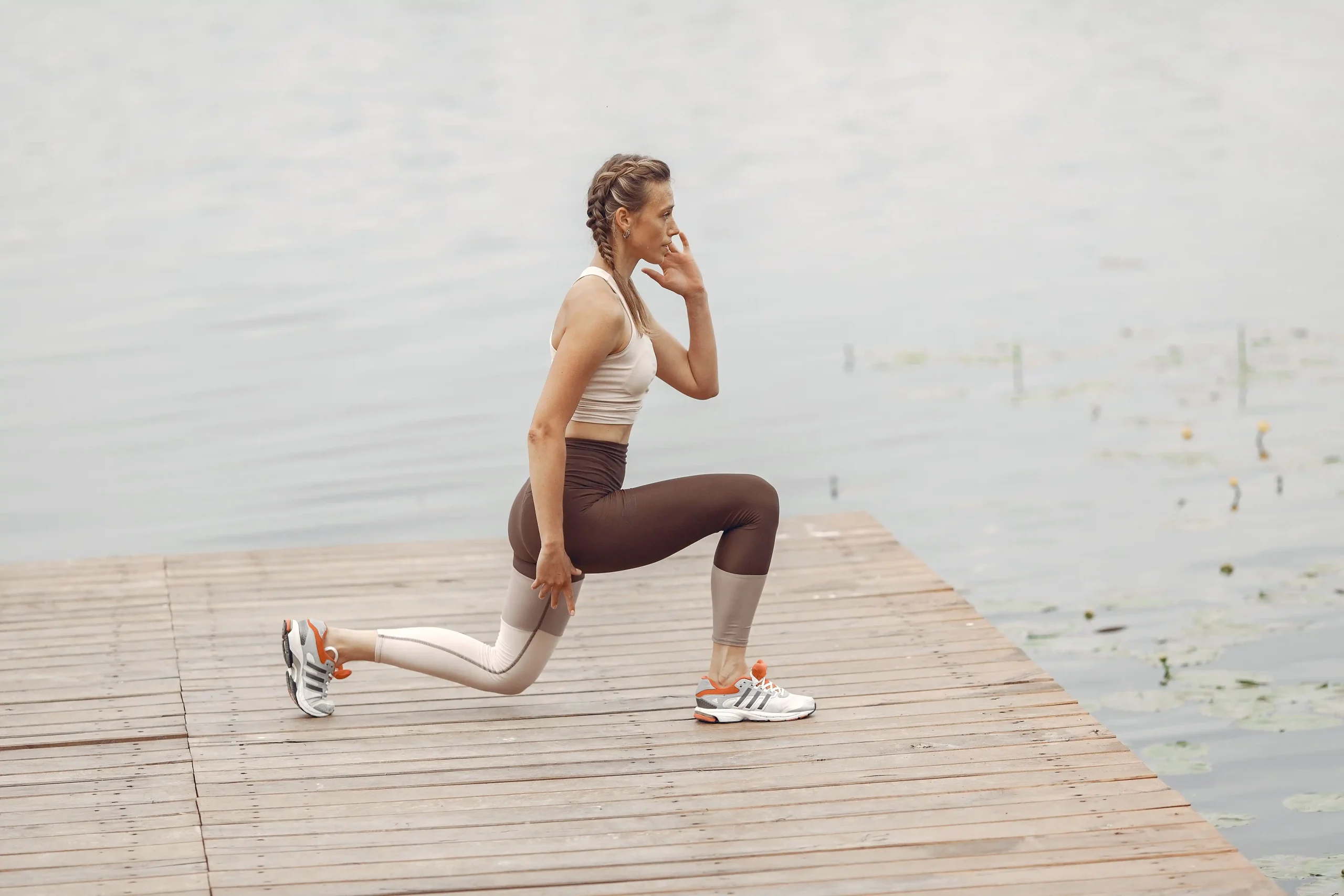
A lunge is a strength-training exercise in which you step into a staggered stance, bend your knees to lower your body, and then return to your starting position. Depending on the variation, you may step forward, backward, or sideways.
Lunges primarily target the quadriceps at the front of the thighs and the gluteal muscles around the hips. The hamstrings, inner-thigh muscles, and calf muscles also contribute to the movement. Meanwhile, the abdominal and back muscles help stabilize your torso, and the muscles around your ankles and hips assist with balance.
Because lunges involve separate movements for each leg, they can help you practice single-leg strength and coordination. These skills are useful for everyday activities such as climbing stairs, walking on uneven surfaces, and changing direction while moving.
There are several types of lunges, but stationary lunges are often a practical starting point for beginners. Since your feet remain in the same positions throughout each repetition, you can focus on your form without worrying about stepping forward or backward repeatedly.
Benefits of Lunges for Beginners
Build Stronger Legs and Glutes
One of the main benefits of lunges is that they strengthen several muscles in the lower body. The quadriceps help control the bending and straightening of your knee, while the glutes contribute to hip stability and help you return to standing.
The hamstrings and other supporting muscles also assist with controlled movement. Practicing lunges consistently can help you gradually improve lower-body strength, especially when combined with other resistance exercises.
Beginners can start with bodyweight lunges before considering additional resistance. As the exercise becomes easier, increasing repetitions or using a more challenging variation may provide a suitable progression.
Improve Balance and Coordination
Lunges require you to maintain a staggered stance while moving your body up and down. Your muscles must coordinate to keep you stable throughout the movement.
For beginners, this can be an opportunity to develop body awareness and improve control. Using a wall, sturdy countertop, or stable chair for light support is perfectly acceptable when learning the exercise.
Balance may improve with practice, but you should not feel pressured to perform lunges without support immediately. Maintaining control is more important than making the exercise look advanced.
Support Everyday Movement
Walking, climbing stairs, and getting up from a low seat all involve coordinated movements of the hips, knees, and ankles. Lunges strengthen muscles that contribute to these activities.
Although performing lunges does not guarantee better performance in every daily activity, incorporating lower-body strength exercises into a balanced fitness program can help improve your physical capacity over time.
Help Create a Balanced Home Workout
Lunges can be combined with squats, glute bridges, wall push-ups, and walking to create a simple home workout. Because they require little space and no equipment, they are convenient for people who prefer exercising at home.
They also offer several modification options, so you can choose a version that matches your current abilities and gradually progress as you become stronger.
How to Do Stationary Lunges Correctly
Stationary lunges, sometimes called static lunges, are a useful variation for beginners because your feet stay in place while you lower and raise your body.
Step 1: Start With a Stable Stance
Stand upright with your feet about hip-width apart. Step one foot forward and the other foot backward to create a staggered stance, as though you are standing on two separate tracks rather than balancing on a single straight line.
Keep enough distance between your feet to feel stable. A stance that is too narrow can make balancing more difficult, while an excessively long stance may feel uncomfortable.
Keep your torso upright and your weight distributed between both feet. If you feel unsteady, position yourself beside a sturdy support before beginning.
Step 2: Bend Both Knees
Slowly bend your knees and lower your body toward the floor. Your back knee should move downward while your front knee bends naturally.
You do not need to lower your back knee all the way to the ground. Begin with a shallow movement and use only the range of motion you can control comfortably.
Keep your torso steady instead of leaning excessively forward or arching your lower back. A slight forward inclination may be natural, but avoid collapsing your chest toward your front thigh.
Step 3: Check Your Front Knee Alignment
Pay attention to the position of your front knee as you lower yourself. Aim to keep it generally aligned with the direction of your toes rather than allowing it to collapse inward.
Your knee may move forward beyond your toes during a lunge. This is not automatically incorrect. Your comfort, balance, control, and overall technique matter more than following a rigid rule about how far forward your knee can travel.
If your knee feels uncomfortable, reduce the depth, adjust your stance, or try a supported variation.
Step 4: Push Back Up
Press through your feet and straighten your legs to return to your starting position. Move smoothly rather than bouncing at the bottom or using momentum to push yourself upward.
Keep your core engaged and your body balanced throughout the movement. Complete a small number of repetitions on one side before switching your stance to work the other leg.
Step 5: Breathe Naturally
Avoid holding your breath throughout the exercise. Breathe in as you lower your body and breathe out as you push back up, adjusting the timing to what feels natural.
The goal is to perform controlled repetitions while maintaining steady breathing. If you find yourself rushing or losing balance, pause and rest before continuing.
Common Lunge Mistakes Beginners Should Avoid
Using a Stance That Is Too Narrow
Standing with your feet almost directly in line with each other can make lunges feel unstable. A staggered stance with some side-to-side space generally provides a more secure base.
If you struggle with balance, adjust your foot placement before trying to lower your body. You can also hold a sturdy support while practicing.
Letting the Front Knee Collapse Inward
Allowing the front knee to move inward excessively can reduce control during the exercise. Focus on keeping your knee generally aligned with your toes.
If you cannot maintain this position, perform fewer repetitions, shorten the range of motion, or choose an easier alternative until your control improves.
Taking Steps That Are Too Long or Too Short
An uncomfortable stance can make lunges harder to perform correctly. If your front foot is too close to your back foot, you may struggle to balance. If the distance is too long, you may feel excessive tension or have difficulty lowering your body.
Experiment with your stance until you can bend both knees comfortably while keeping your feet stable.
Lowering Too Deeply Too Soon
Beginners sometimes try to lower their back knee close to the floor before they have developed sufficient strength or control. Deep lunges are not necessary when you are learning the movement.
Start with a shallow range of motion and gradually increase the depth as your technique improves. Stop if the movement causes sharp pain or joint discomfort.
Rushing Through Repetitions
Moving too quickly can make it difficult to maintain balance and notice technique problems. Instead, lower your body slowly, pause briefly if comfortable, and return to standing with control.
Quality matters more than quantity. A few stable repetitions can be a better starting point than a large set performed with poor form.
How to Use Balance Support During Lunges
Balance support is a useful tool for beginners, not a sign of weakness. If lunges feel unsteady, stand beside a sturdy countertop or place one hand on a stable support.
Use the support lightly to help maintain balance while your legs do the work. Avoid pulling yourself upward with your arm or leaning heavily against the surface.
You can also begin with a stationary split stance without bending your knees. Practice standing with one foot forward and one foot backward, keeping your body steady for several seconds before attempting a shallow lunge.
Once you feel comfortable holding the position, introduce a small bending movement. Gradually increase your range of motion as your balance and confidence improve.
Make sure any support you use will not slide, tip, or move unexpectedly. Avoid relying on lightweight chairs or unstable furniture.
Easier Lunge Alternatives for Beginners
Not everyone is ready to perform traditional lunges immediately. If the movement feels too challenging, alternative exercises can help you develop lower-body strength before trying again.
Chair Sit-to-Stands
Chair sit-to-stands involve sitting on a sturdy chair and standing up again using your legs. Position your feet comfortably, lean forward slightly from your hips, and push through your feet to stand. Lower yourself back to the chair with control.
This exercise is useful for practicing a basic lower-body movement without requiring the same balance as a lunge. You can use your hands for assistance if needed.
Supported Mini Lunges
A supported mini lunge uses the same staggered stance as a stationary lunge but involves only a small downward movement. Hold a stable surface, bend your knees slightly, and return to standing.
This version allows you to practice positioning and coordination while reducing the amount of movement required. Over time, you can gradually increase the depth if it feels comfortable.
Bodyweight Squats
Squats are another option for strengthening the quadriceps and glutes. Stand with your feet approximately shoulder-width apart, push your hips backward, and bend your knees as though sitting on a chair.
Lower yourself only as far as you can control comfortably before returning to standing. If necessary, begin with chair squats.
Glute Bridges
Glute bridges are performed while lying on your back with your knees bent and feet flat on the floor. Tighten your glutes and lift your hips until your body forms a comfortable line from your shoulders toward your knees, then lower slowly.
This exercise emphasizes the glutes and provides a way to work on hip strength without balancing on one leg.
These alternatives can be included in a beginner workout while you gradually develop the strength and confidence needed for lunges. If you have persistent knee or hip pain, consider consulting a healthcare professional or physical therapist to identify suitable exercises.
How Many Lunges Should Beginners Do?
The right number of lunges depends on your current fitness level, balance, and ability to maintain good technique. A practical starting point is one set of five controlled repetitions per leg, using support if needed.
If this feels comfortable, you can gradually work toward one or two sets of five to eight repetitions per leg. Rest between sets and stop when fatigue makes it difficult to maintain control.
Beginners can practice lower-body strength exercises two or three days per week, allowing recovery time between sessions. You do not need to perform lunges every day to make progress.
As you become stronger, you may increase the number of repetitions, improve your range of motion, or try a more challenging variation. Progress gradually instead of increasing everything at once.
Consistency is more important than intensity when establishing a new exercise habit. If you experience sharp pain, significant joint discomfort, or worsening symptoms, stop the exercise rather than pushing through.
Nutrition Tips to Support an Active Lifestyle
Exercise and nutrition work together to support general health and fitness. Your body needs enough energy, fluids, protein, carbohydrates, fats, vitamins, and minerals to support daily activities and recover from exercise.
Aim to eat balanced meals that include a variety of nutritious foods. Protein sources such as eggs, fish, chicken, beans, tofu, and dairy products help supply amino acids needed for muscle maintenance and repair. Fruits and vegetables also contribute vitamins, minerals, fiber, and other beneficial nutrients.
Enjoy Convenient Fruit Snacks With Skinii Dehydrated Strawberries
Fruit can be a convenient addition to a balanced eating routine, whether you enjoy it at breakfast, between meals, or alongside other nutritious foods. Strawberries are known for their naturally sweet and slightly tart flavor, making them a popular option for snacks and recipes.
If you prefer a portable fruit option, consider Skinii® Dehydrated Strawberries – 5oz. They can be enjoyed as a snack or added to foods such as oatmeal, cereal, and yogurt, depending on your preferences.
Dehydrated fruit can be convenient when fresh fruit is not readily available, although removing water makes the fruit more concentrated by weight. Serving sizes therefore matter, and the nutritional content depends on the product’s ingredients and preparation. Check the packaging for the ingredient list, serving size, added sugars, and nutrition information.
Dehydrated strawberries are not a substitute for a complete meal, and they do not directly improve lunging performance. Instead, they can be one small part of an overall eating pattern that includes a variety of foods. Pairing fruit with a protein source, such as plain yogurt or nuts, may help make a snack more filling.
Remember that no single food is responsible for fitness results. A sustainable routine combines regular activity, balanced nutrition, hydration, and adequate rest.
A Simple Beginner Workout With Lunges
You can start with a short routine that combines lunges with other accessible exercises. Begin with three to five minutes of easy walking or marching in place to warm up.
Next, perform five stationary lunges per leg, using balance support or a shallow range of motion as needed. Follow with eight to ten chair sit-to-stands or bodyweight squats, then eight to twelve glute bridges.
Rest between exercises and adjust the repetitions according to your ability. If lunges feel too difficult, replace them with chair sit-to-stands or supported mini lunges.
Finish with a few minutes of relaxed walking and gentle movement. As you become more comfortable, you can gradually increase your repetitions or add other exercises to your routine.
You can also include walking on separate days to build your overall activity level. The most effective beginner workout is one you can perform consistently without feeling pressured to progress too quickly.
Safety Tips Before Starting Lunges
Choose a stable, nonslip surface and wear comfortable clothing that allows you to move freely. Keep your exercise area clear and use a sturdy support if you need help with balance.
Warm up before exercising and begin with a small number of repetitions. If you have an existing injury, ongoing knee or hip pain, significant balance difficulties, or a medical condition that affects exercise, seek guidance from a qualified healthcare professional before starting a new workout routine.
Stop if you experience sharp pain, dizziness, chest pain, or unusual shortness of breath. These symptoms should not be treated as normal exercise discomfort, and urgent symptoms may require immediate medical attention.
Most importantly, give yourself time to learn. You do not need to perform deep lunges or complete a long workout on your first day. Developing a comfortable and controlled movement pattern is a meaningful first step.
Final Thoughts: Build Strength and Confidence One Lunge at a Time
Lunges are a valuable lower-body exercise for beginners who want to improve leg strength, balance, and coordination at home. They target the quadriceps and glutes while engaging supporting muscles that help stabilize the hips, knees, and torso.
Start with stationary lunges, keep your feet in a stable staggered stance, and pay attention to your knee alignment. If balancing is difficult, use a sturdy support or choose easier alternatives such as chair sit-to-stands, mini lunges, squats, and glute bridges.
Combine your workouts with balanced meals, convenient fruit snacks when appropriate, enough water, and adequate recovery. You do not need a perfect routine to begin making healthier choices.
With patience and consistent practice, you can gradually develop stronger legs, greater confidence, and a more sustainable approach to exercise. Start at your own level, focus on good form, and let progress happen one repetition at a time.



Leave a Comment