
How to Tone Your Thighs With Bodyweight Squats: A Beginner’s Step-by-Step Guide
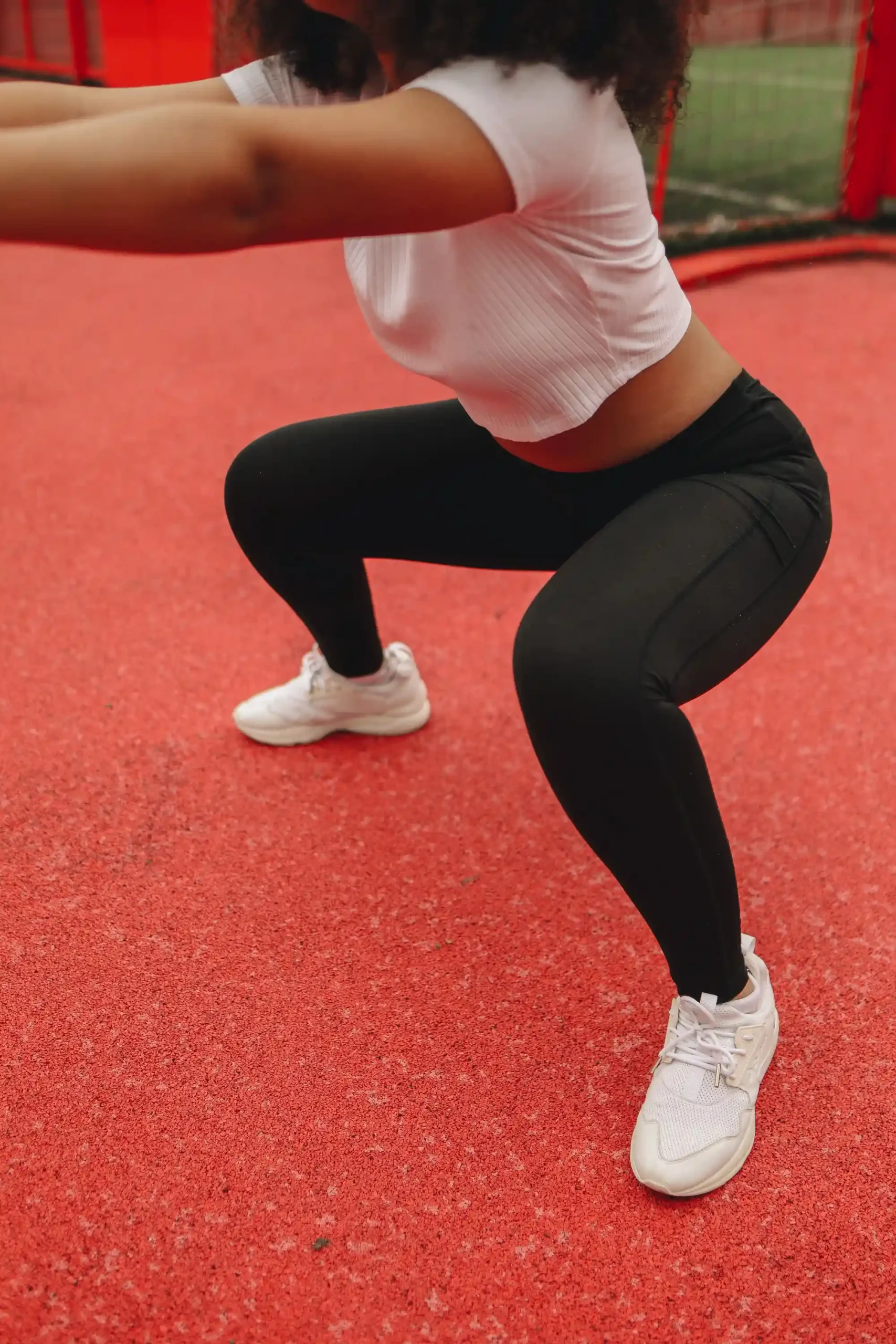
If you want stronger, firmer-looking thighs without needing a gym membership or expensive equipment, bodyweight squats are one of the simplest exercises to add to your fitness routine. This beginner-friendly movement works several major muscles in the lower body, including the quadriceps, hamstrings, glutes, and muscles that help stabilize your hips and core. Because bodyweight squats use your own body as resistance, they can be performed almost anywhere and easily adjusted as your fitness level improves. Whether you are starting your first workout routine or looking for a simple exercise to add to your existing program, learning how to perform squats correctly can help you build lower-body strength and improve movement quality.
Can Bodyweight Squats Tone Your Thighs?
Bodyweight squats can help strengthen and develop the muscles in your thighs, but it is important to understand what the word “tone” actually means in fitness. There is no single exercise that can specifically burn fat from your thighs. When people talk about toning their legs, they are usually referring to developing muscle while managing overall body fat. Bodyweight squats can contribute to the muscle-building side of that equation by challenging the muscles of the lower body.
Your quadriceps, located at the front of your thighs, work strongly during the squatting movement. Your hamstrings at the back of your thighs and your glutes also contribute to the exercise. As these muscles become stronger, your legs may develop a firmer and more defined appearance. Combining squats with regular walking, cardiovascular activity, strength training, balanced nutrition, and adequate recovery can support broader fitness and body-composition goals.
Why Bodyweight Squats Are Great for Beginners
One of the biggest advantages of bodyweight squats is their simplicity. You do not need dumbbells, resistance bands, machines, or a gym to perform them. All you need is enough space to stand comfortably and move through the exercise safely.
Bodyweight squats are also easy to scale. If you are new to exercise, you can begin with a small number of repetitions and focus on learning proper form. As your strength and confidence improve, you can increase the number of repetitions, add sets, slow down the movement, or eventually progress to more challenging squat variations.
Squats are also a functional movement. You perform similar movements in everyday life when sitting down, standing up, picking something up, or lowering your body toward the floor. Learning to squat with good technique can therefore help you become more comfortable with everyday movement while building lower-body strength.
What Muscles Do Bodyweight Squats Work?
Although squats are often described as a thigh exercise, they actually involve several muscle groups. The quadriceps are heavily involved as you straighten your knees and return to the standing position. These muscles are located on the front of your thighs and play an important role in many everyday movements.
The glutes are also major contributors. They help extend your hips as you rise from the squat. Your hamstrings assist with hip movement and help stabilize the back of your legs. Your calves and muscles around your ankles also contribute to maintaining balance and control.
Your core is involved as well. Although you are not performing a traditional abdominal exercise, your core muscles help stabilize your torso while you move. This means that a properly performed bodyweight squat can provide more than just a thigh workout.
How to Do a Bodyweight Squat Correctly
Start by standing with your feet approximately shoulder-width apart. Depending on your individual body structure and comfort, your feet may be slightly wider or narrower. Keep your toes pointing forward or slightly outward rather than forcing them into one exact position.
Engage your core gently and keep your chest comfortably lifted. Begin the movement by bending your knees and pushing your hips backward as if you are preparing to sit in a chair. Continue lowering your body while keeping your feet firmly planted on the floor.
Your knees should generally track in the same direction as your toes. Avoid allowing them to collapse inward as you lower your body. Descend only as far as you can while maintaining control and comfortable positioning.
Once you reach a comfortable depth, press through your feet and extend your hips and knees to return to the standing position. Keep the movement controlled rather than bouncing at the bottom.
You do not need to squat extremely low to benefit from the exercise. Your ideal squat depth will depend on your mobility, strength, body proportions, and experience level. Good form and control should come before trying to achieve a deeper squat.
How Many Squats Should a Beginner Do?
If you are new to exercise, you do not need to perform hundreds of squats. Starting with two sets of 8 to 12 repetitions can be enough to introduce your muscles to the movement. Rest between sets and focus on maintaining good technique throughout every repetition.
As the exercise becomes easier, you can gradually increase the number of repetitions or add another set. Another option is to make each repetition more controlled by taking a little longer to lower your body.
The goal is progressive improvement rather than immediate exhaustion. If your form begins to deteriorate, reduce the number of repetitions or take a longer rest. Consistency will ultimately be more useful than trying to complete an unnecessarily difficult workout.
Common Bodyweight Squat Mistakes to Avoid
One of the most common squat mistakes is allowing the knees to collapse inward. This can happen when your muscles become fatigued or when you are still learning how to control the movement. Focus on keeping your knees aligned with the direction of your toes.
Another common mistake is lifting your heels from the floor. Your feet should remain stable throughout the movement. If your heels repeatedly come up, you may need to adjust your stance or work on your ankle mobility.
Some beginners also lean their upper body too far forward. A slight forward torso angle can be completely normal during a squat, but excessive leaning can make the movement feel less controlled. Keep your chest comfortably lifted and your spine in a natural position.
Another mistake is rushing through repetitions. Performing squats extremely quickly may make it harder to control your knees, hips, and torso. Slow down and focus on the movement rather than simply counting repetitions.
Finally, avoid forcing yourself into a squat depth that your body is not ready for. Going lower is not automatically better. A controlled squat performed through a comfortable range of motion is a better starting point.
How to Make Bodyweight Squats More Effective
Once basic squats become comfortable, there are several ways to increase the challenge without immediately adding weights. One simple method is to slow down the lowering portion of the exercise. Taking two or three seconds to descend can increase the amount of time your muscles spend under tension.
You can also add a brief pause at the bottom of the squat before standing. This requires greater control and can make a familiar exercise more challenging.
Another option is increasing your total training volume gradually. Instead of jumping from two sets to five sets, add one additional set when you feel ready. Small changes can create meaningful progression over time.
You can also introduce different bodyweight squat variations. However, master the basic squat first. Learning the fundamental movement pattern gives you a stronger foundation for more advanced exercises.
Bodyweight Squat Variations for Beginners
The chair squat is a useful variation if you are still developing confidence and balance. Stand in front of a sturdy chair and squat backward until your hips gently approach the seat. You can use the chair as a reference point without completely relaxing your body onto it.
The sumo squat is another variation that uses a wider stance with the toes turned slightly outward. This changes the position of your hips and legs and provides a different challenge for your lower body.
A narrow-stance squat brings your feet closer together and can change how the exercise feels. Because everyone’s mobility is different, use a stance that allows you to maintain control and comfortable alignment.
Once you have built a solid foundation, you can explore squat pulses or squat holds. These variations increase the challenge without requiring equipment. However, they should be introduced gradually rather than replacing proper full-range repetitions entirely.
Can Squats Make Your Thighs Bigger?
Some people worry that strength exercises such as squats will automatically make their thighs significantly larger. In reality, changes in muscle size depend on many factors, including genetics, training volume, resistance, nutrition, recovery, and individual physiology.
Bodyweight squats can strengthen your thigh and glute muscles, particularly when you are new to resistance training. However, developing substantial muscle size generally requires progressively challenging resistance training over time along with appropriate nutrition and recovery.
If your goal is simply to become stronger and develop a firmer appearance, bodyweight squats can be a practical starting point. You can adjust the amount of training according to your personal goals and fitness level.
Squats and Overall Fat Loss
If your goal is to make your thighs appear leaner, it is important to understand that squats alone cannot specifically burn thigh fat. Fat loss occurs throughout the body and is influenced by your overall energy balance, activity level, nutrition, genetics, sleep, and other factors.
Instead of searching for one exercise that will remove fat from a particular area, build a balanced fitness routine. Regular walking or other cardiovascular activity can increase your overall movement, while strength exercises can help develop and maintain muscle.
Nutrition also plays an important role in supporting your workouts. Getting enough protein is useful for muscle maintenance and recovery as part of a balanced diet. If you are looking for a convenient plant-based protein option, you can learn more about Skinii Vegan Protein Low Carb Vanilla and determine whether it fits your individual nutrition preferences and goals.

How Often Should You Do Bodyweight Squats?
Beginners can generally include bodyweight squats in their routine several times per week, depending on their overall workout schedule and recovery. You do not need to perform squats every day to make progress.
For a simple starting routine, try two or three squat sessions per week. Give your muscles enough time to recover between challenging lower-body workouts, especially if you are also performing lunges, step-ups, running, cycling, or other leg exercises.
As your fitness level improves, you can adjust your workout frequency, sets, repetitions, and exercise variations. Pay attention to how your body responds and avoid increasing everything at once.
How Long Does It Take to See Results From Squats?
There is no exact timeline for seeing visible changes from bodyweight squats. Your results will depend on your starting fitness level, consistency, nutrition, activity level, recovery, genetics, and overall training program.
You may notice improvements in strength before you see obvious physical changes. For example, you might find that you can perform more repetitions, squat with better control, or complete everyday movements more comfortably.
Visible muscle definition can take longer and varies considerably between individuals. Rather than judging your progress only by how your thighs look, pay attention to improvements in strength, endurance, balance, mobility, and exercise technique.
Taking progress photos or keeping a simple workout log can also help you recognize changes that may be difficult to notice from day to day.
A Simple Beginner Squat Workout
If you want to start today, keep your first workout simple. Begin with a few minutes of gentle movement to warm up your body. You can then perform two sets of 8 to 12 controlled bodyweight squats, resting between sets.
Once you are comfortable with the basic movement, add another lower-body exercise such as glute bridges or reverse lunges. Finish with gentle stretching or relaxed movement if it feels comfortable.
Over the following weeks, gradually increase the challenge. You might move from two sets to three sets, increase your repetitions, slow down your tempo, or introduce a squat variation. There is no need to completely change your workout every week. Repeating fundamental movements consistently can help you build strength and confidence.
The Bottom Line
Bodyweight squats are one of the most accessible exercises for beginners who want to strengthen and tone their thighs. They work the quadriceps, hamstrings, glutes, calves, and core while requiring no special equipment. With proper technique and gradual progression, squats can become an important part of a beginner-friendly lower-body workout.
However, squats are not a magic solution for losing thigh fat. You cannot choose exactly where your body loses fat by exercising a specific muscle group. For a leaner and stronger appearance, combine lower-body strength training with regular physical activity, balanced nutrition, sufficient protein, and consistent recovery.
Start with the basics, focus on your form, and give yourself time to improve. You do not need an advanced workout or a complicated gym routine to begin building stronger legs. A few well-controlled bodyweight squats, performed consistently and progressed gradually, can be a powerful first step toward a stronger lower body and a healthier fitness routine.


Leave a Comment